
Sources Behind New Britain Previous Residents
The strongest previous-resident trail starts with the land record and then changes record type as the question moves from ownership to household history. New Britain has no operative Hartford County recorder for this work. The Town Clerk holds the local land records, while RecordHub supplies the online index and images for the newer period. The historic HLR route keeps older books available, but the absence of a name-index hit is not proof that an old conveyance is missing.
| Source | Years It Covers | Where Held | What It Shows |
|---|---|---|---|
| New Britain land books and HLR | 1850-1958, books 1-54 | RecordHub and Town Clerk | Conveyances, legal descriptions, historic images, and manual page review |
| Indexed land images | October 1, 1958-present | RecordHub | Grantor, grantee, instrument, book/page, and document image |
| City directories | Located 1882-85, 1928-31, 1942-45, and 1950s-1990, with gaps | Library, FamilySearch, LOC, and regional holdings | Dated occupants, streets, telephones, and business or occupation notes |
| Reverse directories | 1984-1985 located | Library of Congress guide and holdings | Address-to-name and telephone snapshots |
| Federal census | 1790-1950 public; 1960 opens in 2032 | NARA and authorized digital copies | Household, ward or district, age, relationship, and birthplace |
| Historic map | 1912 located | Library of Congress | Period street grid, lots, and setting, not title |
| Building and permit files | Current portal link; online coverage not located | New Britain Building Department and ViewPoint | Permit, inspection, certificate, or approval trail if requested |
Use the period that fits the question: RecordHub for a recent conveyance, HLR for earlier land books, a directory for a dated household, census for a family snapshot, and the Town Clerk or Building Department when an image or permit is not online. The city archive begins in 1850, but the custodian still changes by record type.
Tracing New Britain Previous Residents Through Deeds
A deed chain identifies recorded conveyances, not every person who lived at a property. Resolve the parcel before searching names. MapXpress supplies street, geometry, MBL or MBL2, and parcel context. Vision supplies the card, owner, mailing address, sale history, book/page references, and assessment fields. Mailing address is not situs, and owner is not occupant proof.
- Resolve the current number and street spelling in MapXpress and Vision. Save the PID or MBL, situs, owner, mailing address, and any current lot or unit detail.
- Search RecordHub by the current owner or grantee. Open the latest deed image and capture the recording or execution date, instrument number, book/page, consideration, legal description, MBL, map or plat, and prior instrument.
- Read the grantor and prior owner named in that deed. Search the seller as an earlier grantee, then compare the next older conveyance instead of relying on a single index result.
- Repeat backward, keeping mortgages, releases, assignments, liens, probate instruments, and map references in separate rows. They affect the file trail but are not the same as a conveyance.
- For a pre-October 1, 1958 result, select HLR, choose a volume, load the book, and identify the printed page or image range. Books 1-54 require manual review because historic material is not grantor/grantee indexed.
- If the current number fails, try the street name, former spelling, lot or map reference, MBL, adjacent owner, and neighboring parcel. A legal description can be a better bridge than a changed number.
- Give the Town Clerk a book/page or instrument number when an image is missing. Online index review is available around the clock, while copies are charged at $1 per page plus $2 per document; walk-in recording ends 15 minutes before close and e-recording runs 8:30-3:00.
- Grantor and grantee
- The grantor transfers an interest; the grantee receives it. Search direction matters because a name can change roles from one deed to the next.
- Chain of title
- The linked sequence of recorded conveyances and related instruments used to follow an interest backward through prior owners.
- Legal description
- The parcel description used in the instrument, such as a lot, map reference, or metes-and-bounds description. It can remain useful when a street number changes.
- Criss-cross directory
- A reverse directory that begins with an address and points to a named subscriber or occupant, usually with a telephone and publication date.
- Enumeration district
- A census-area label used to organize schedules. Ward, district, street, and household order can help locate a place when the old address is not indexed in the modern way.
A complete chain needs a confidence note and a stopping point. The 1850 start, 1958 indexing cutoff, absent image, unlocated street-renumbering list, or missing directory run are valid boundaries. A deed party is not automatically a household member.
New Britain Past Residents in Directories
Directories supply different evidence. A printed entry may show surname or initials, street and number, telephone, spouse or business note, apartment notation, and page. It is a dated publication, not a deed or current-residence proof. The collections and entry method are covered on the New Britain directory book page; the address trail uses those tools to follow one place.
The household process works best as a flow across nearby dates:
- Write down the address exactly as printed in each directory, including street spelling, initials, telephone, apartment mark, publisher, year, and page.
- Pair each directory year with the closest public census year. Census records from 1790 through 1950 show names, ages, relationships, birthplaces, household members, and sometimes ward or street context; they do not establish current residence.
- Search the New Britain Herald ecosystem by surname plus street, spouse, cemetery, business, or neighborhood term. Preserve the notice title, date, page, image, and OCR confidence, then inspect microfilm when OCR misses initials or Polish-name spellings.
- Test a possible move against a later directory, deed, probate file, cemetery result, or dated newspaper notice. Mark a move only when a later source supports it.
- Separate roles in the worksheet: owner, directory occupant, telephone subscriber, census household member, probate fiduciary, cemetery late residence, and current mailing contact are not interchangeable.
Fairview Cemetery can close a family-history gap without equating burial with residence. The city page describes a 1756 founding, 100-acre grounds, and more than 38,000 interments. Mid-1890s-forward records can include late residence, birthplace, death details, undertaker, parents, maiden name, spouse, section, block, lot, and veteran clues.
The Fairview Cemetery records page explains the local research route and its limits.
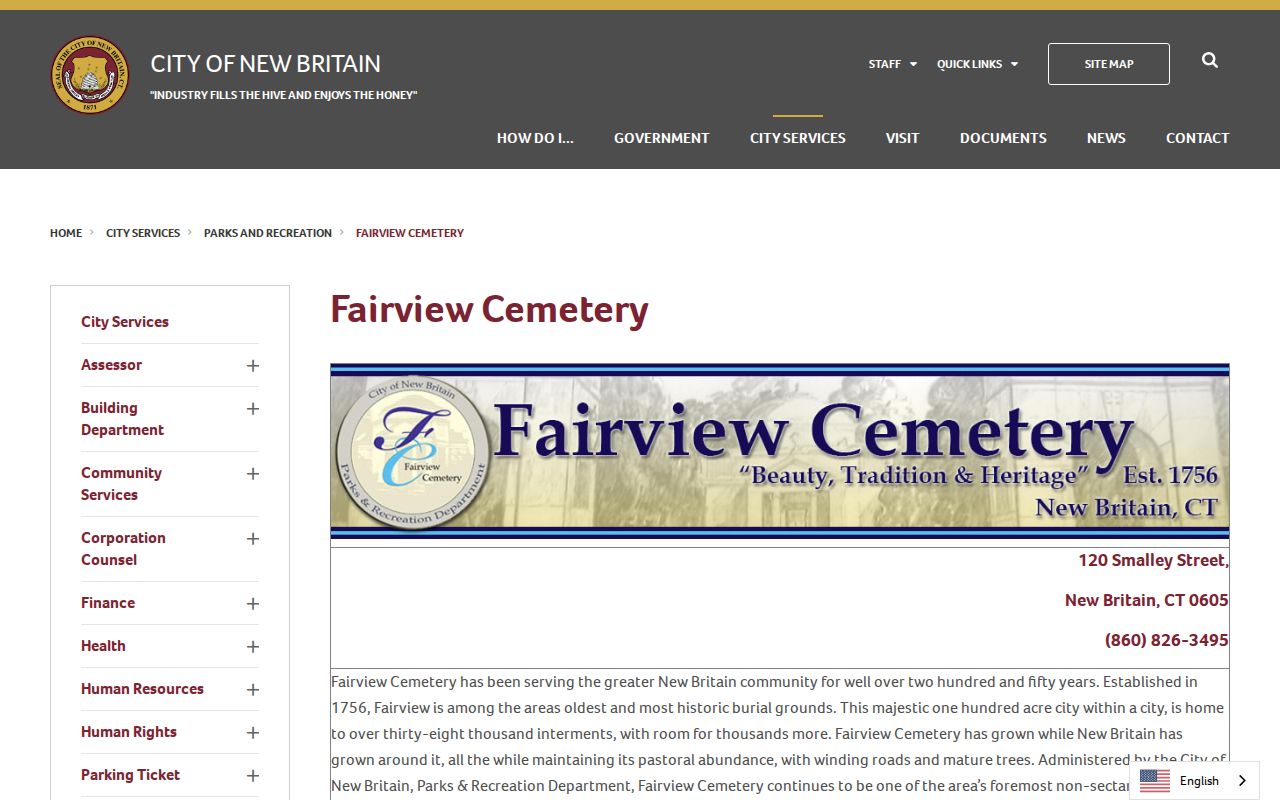
Compare the cemetery clue with a directory, deed, or vital record before adding it to a New Britain previous-resident trail.
New Britain Address Changes
Old address searches fail when a number, spelling, lot pattern, or municipal description changed. No complete official online street-renumbering chronology was located. Use the 1912 map, Town Clerk maps, directory street sections, legal descriptions, and adjacent owners as clues. Search the street without the modern number, then compare lots and neighboring names.
MapXpress provides current parcel boundaries, address and lot numbers, zoning, trails, utilities, easements, environmental layers, and sales layers by Grand List year. Vision can show ownership history and book/page references. If a parcel is split, combined, boundary-adjusted, or address-changed, retain that provenance before assuming a person moved. A map is context, not a legal survey.
Researcher's date ledger. For each New Britain address, keep the directory observation date, deed date, census year, cemetery event, map year, source URL, page or image, and portal access date. The ledger explains gaps without turning an old result into a present claim.
New Britain Old-House Trail
The Connecticut State Library old-house guide gives a practical order: current parcel, RecordHub deeds and maps, assessor history, directories, census, newspapers, probate, cemetery material, and building files. It recommends former street names, owner surnames, neighboring parcels, company names, and translated or Polish-name variants as pivots, each requiring an image or primary index check.
Read the Connecticut State Library old-house guide before choosing a stopping point.
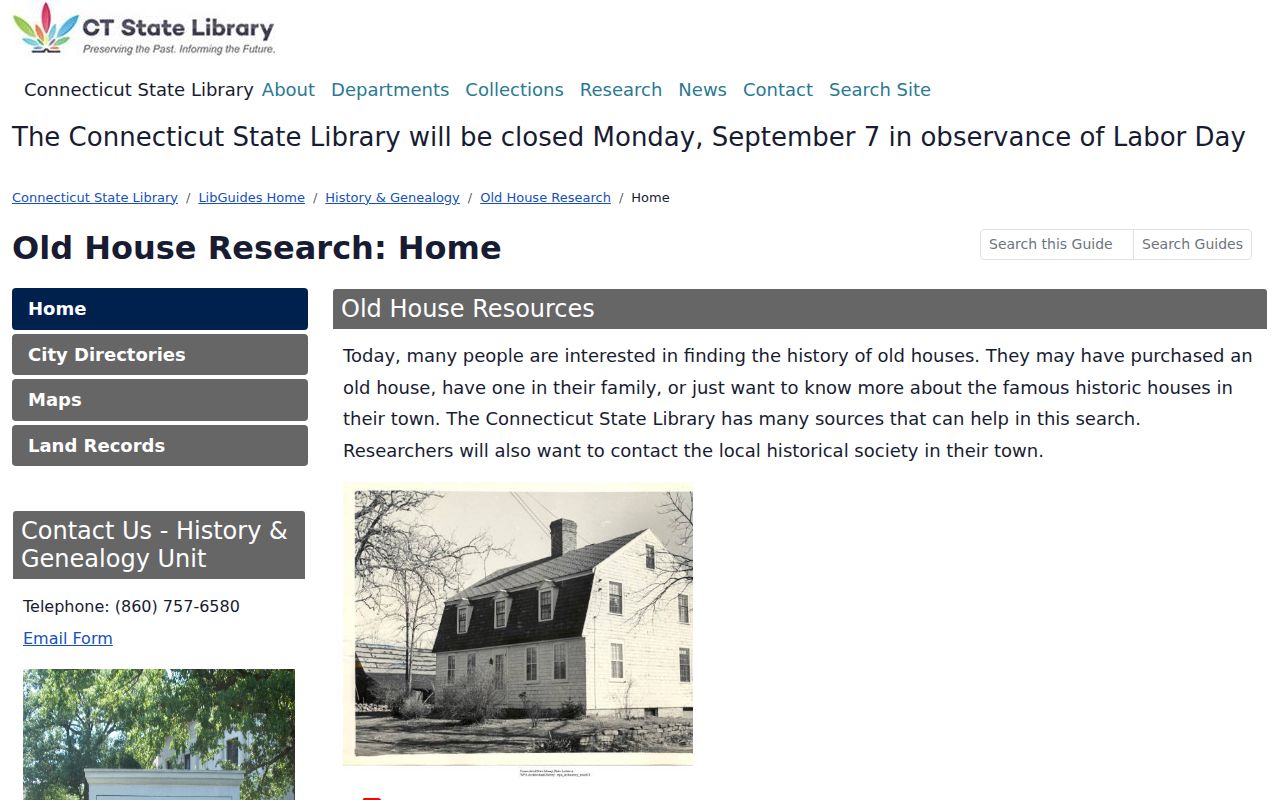
It helps when a current address is absent from an older directory. A former lot description or adjacent owner can identify the place when a number does not. Keep the map as context, not a deed substitute.
Archive Stops for New Britain Previous Residents
Local access is distributed. The New Britain Public Library Local History Room at 20 High Street is open Mondays and Wednesdays from 9 to 2 and by appointment. Its shelf and microfilm route includes directories, maps, Herald material, Heritage Hub notices from 1704 to today, FamilySearch, Burritt journals, Symonds, Hanna, and Klingberg scrapbooks, Rev. John Smalley writings, and yearbooks from 1904. The library does not publish a complete directory run online, so ask staff to verify it.
The Connecticut State Library History and Genealogy page is an additional reference route for census, directory, probate, naturalization, and old-house guidance.
For a distributed collection, save title, call number, year, page, and access route. FamilySearch lists 18 reels with Price, Lee and Company examples from 1882-83 through 1884-85. Library of Congress scans cover 1942-45, 1958-1960/61, and additional mid-1960s volumes; its guide locates New Britain reverse directories for 1984 and 1985. Regional holdings may require an appointment or travel.
New Britain Industrial and Cemetery Clues
New Britain’s “Hardware City of the World” identity supplies historical search pivots. Elihu Burritt connects the Public Library journals, CCSU’s Elihu Burritt Library, and the Industrial Museum motto, “Industry Fills the Hive and Enjoys the Honey,” attributed to Burritt in 1871. Company names, factory addresses, school ties, and community references can distinguish similar names, but remain context clues.
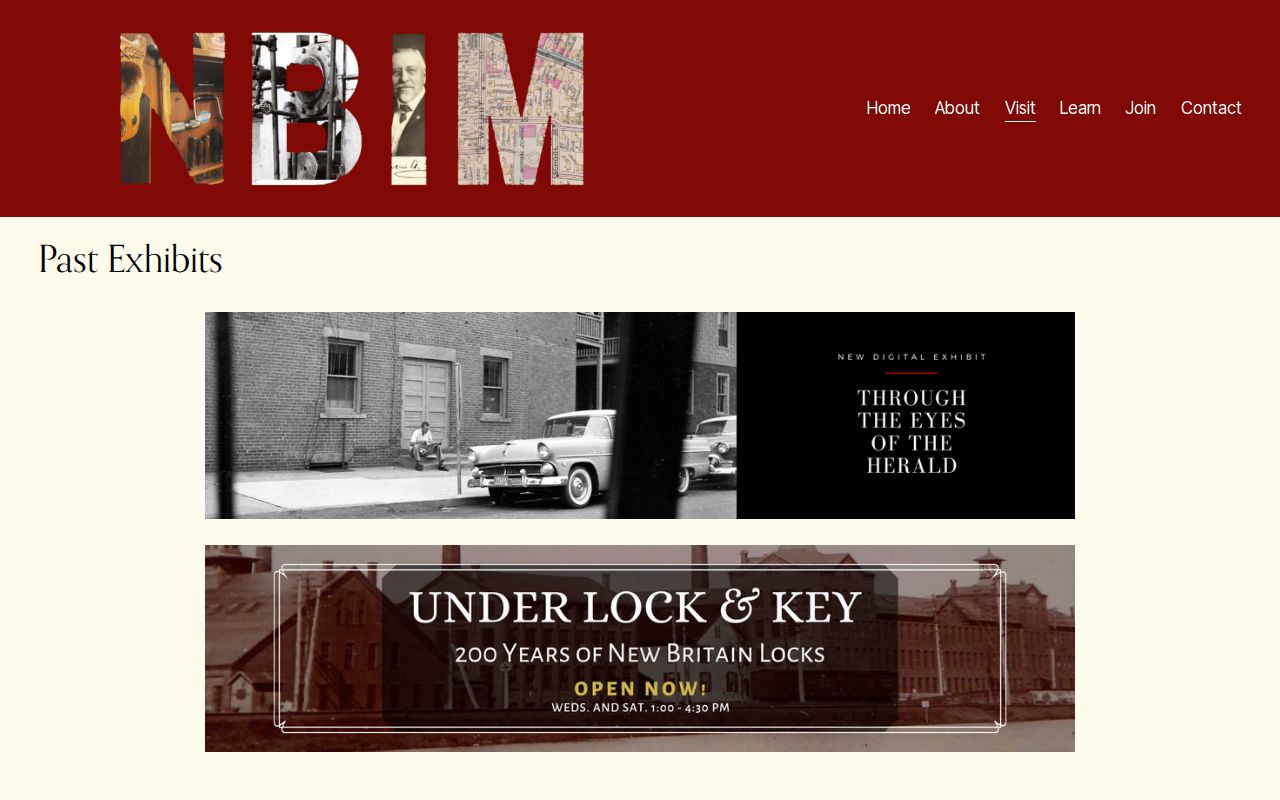
The New Britain Institute history page describes archive donations from Stanley Works and other historic companies.
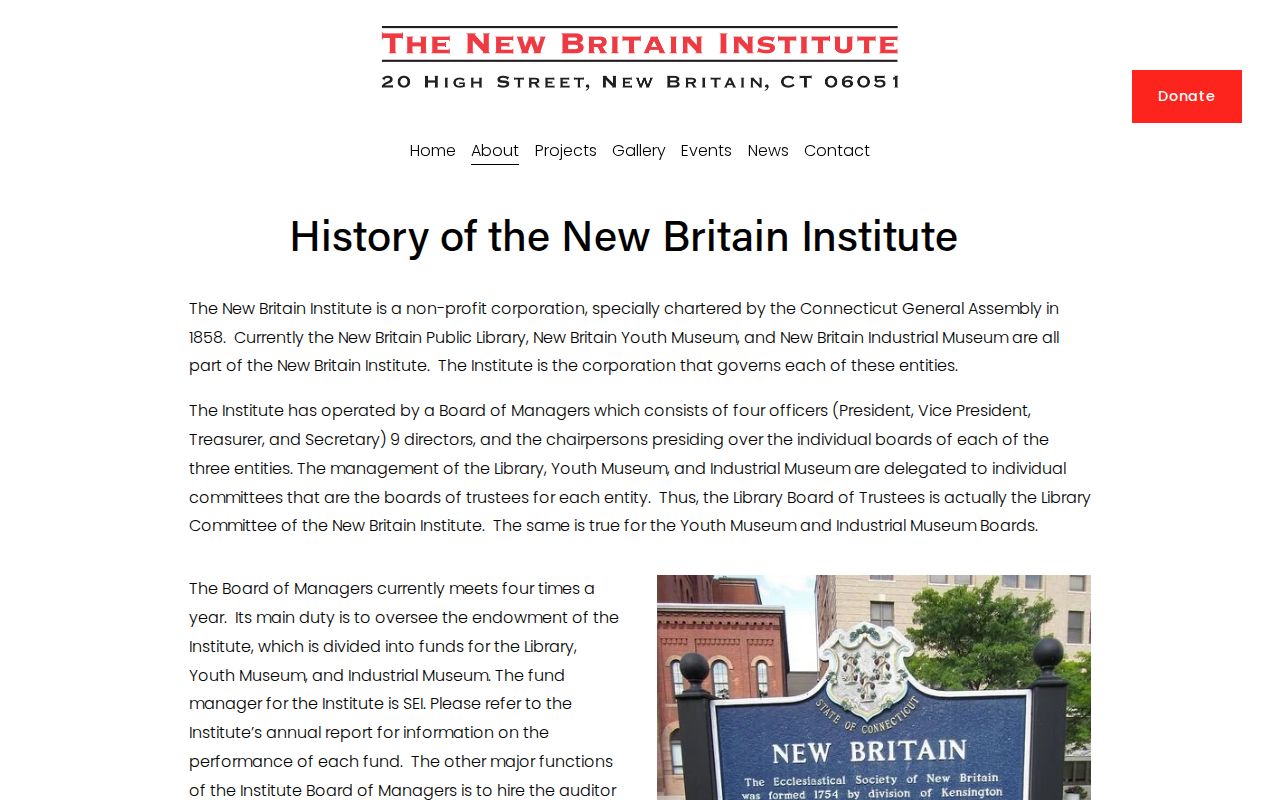
Use the image for company and institutional terms, then return to a deed, directory, newspaper, or census page. The New Britain Institute is not a current resident index.
The New Britain Industrial Museum exhibits page adds the artifact and exhibit route for local manufacturing history.
CCSU special collections at 1615 Stanley Street include Polish Heritage, rare books, university archives, yearbooks, and catalogs. Use the public catalog, interlibrary loan, and second-floor Special Collections route at 860-832-2055. Save the collection title and finding-aid detail.
Where Previous-Resident Research Stops
A past-household result should end with a source boundary, not a guess. A directory entry may be a subscriber, a census line a household snapshot, a cemetery late residence a death-record clue, a deed party a legal role, and a probate file an heir or fiduciary lead. None alone proves that every household member lived at the address.
For a living person, preserve only necessary detail and verify with the custodian. The Town Clerk, library, State Library, Building Department, cemetery staff, court, probate office, and archive each control a different route. If a volume, image, crosswalk, or protected record is unavailable, state that limit.
Lawful use. New Britain previous-resident research is appropriate for house history, family history, and personal curiosity. Do not use a dated record to watch, harass, intimidate, or follow a living person. A careful source log protects both the researcher and the people described.